The human price of reality television
This report will focus on how reality television balance factual storytelling and entertainment about ordinary people's lives to a larger audience in order to profit and grow. It will investigate the psychological impact of exploitation, privacy invasion and emotional manipulation on 'non-professional' everyday people that are not trained as actors and their vulnerability to producers and editors when participating in unscripted media. Recent moral outrage and media criticism as a result of multiple high-profile suicides have lead to significant reconsideration of duty of care among broadcasters, emphasising a need to risk access participates and provide psychological support (Coleman, 2023). Audiences take in more factual pieces and engage further with the text when it is heavily intertwined within a narrative plot line (Glaser, 2012) and the inherent chaotic and frenetic nature of this storytelling may often see contributors exploited to fit an archetype, underpaid and overworked. CBS is a global media company whose main content distribution arm is Paramount Global Content Distribution and this report will evaluable how CBS addresses debates regarding the pressure created by the performative expectations of chaotic modern formats. They will recommend evidence-based strategies for mitigating the impacts of instant fame on self-image within a hyper-competitive attention-economy of upheaval (Coleman, 2023).
The main concern for CBS within this report is the welfare and ethical treatment of ordinary people featured in reality television shows is as participants are subject to identity reconstruction, hegemonic discourse, privacy invasion, and psychological harm as evidenced by recent examples of threats to wellbeing, alongside the network's desire audience engagement and entertainment value (Palmer, 2013). Reality television is characterised by the effort to create a semblance to the audience's lives that is unachievable without the influence of editing and biased production and recent tragedies have heightened awareness regarding the psychological harm of on participants and questioned the duty of care production companies have. At least 38 former stars of reality television have taken their own lives after appearing on a show (ABC, 2021) including The Bachelor, Real Housewives of Beverly Hills, The Voice, Gordon Ramsey's Kitchen Nightmare, Love Island and CBS's own Big Brother. To be effective at engaging audiences the genre is so extensively manipulative that it compromises participants authentic representation of themselves by editing of 'live' footage, covert aggression and overemphasis on negative traits (Whitlock, 2012) and led researches to refer to the genre as “feral” and “opportunistic” (Hill, 2007).
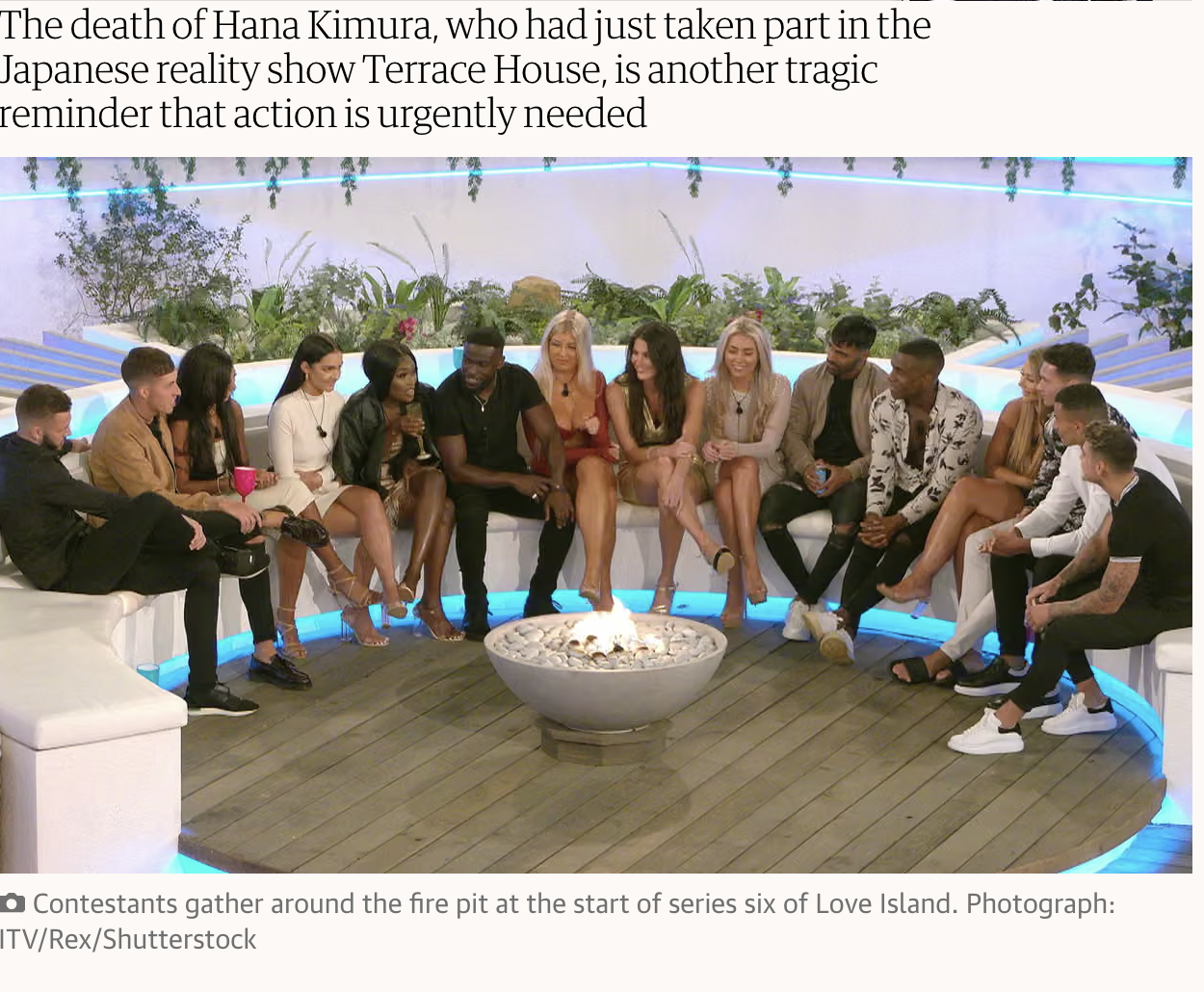
The death of Hana Kirmura is an example of tragic results from the hate received online when individuals are framed in a negative light and questions the duty of care broadcasters have. The Guardian (2020) outlines how one of the major catalysts for the psychological harm suffered is online abuse and harassment after the show has aired and calls for stronger duty of care guidelines.
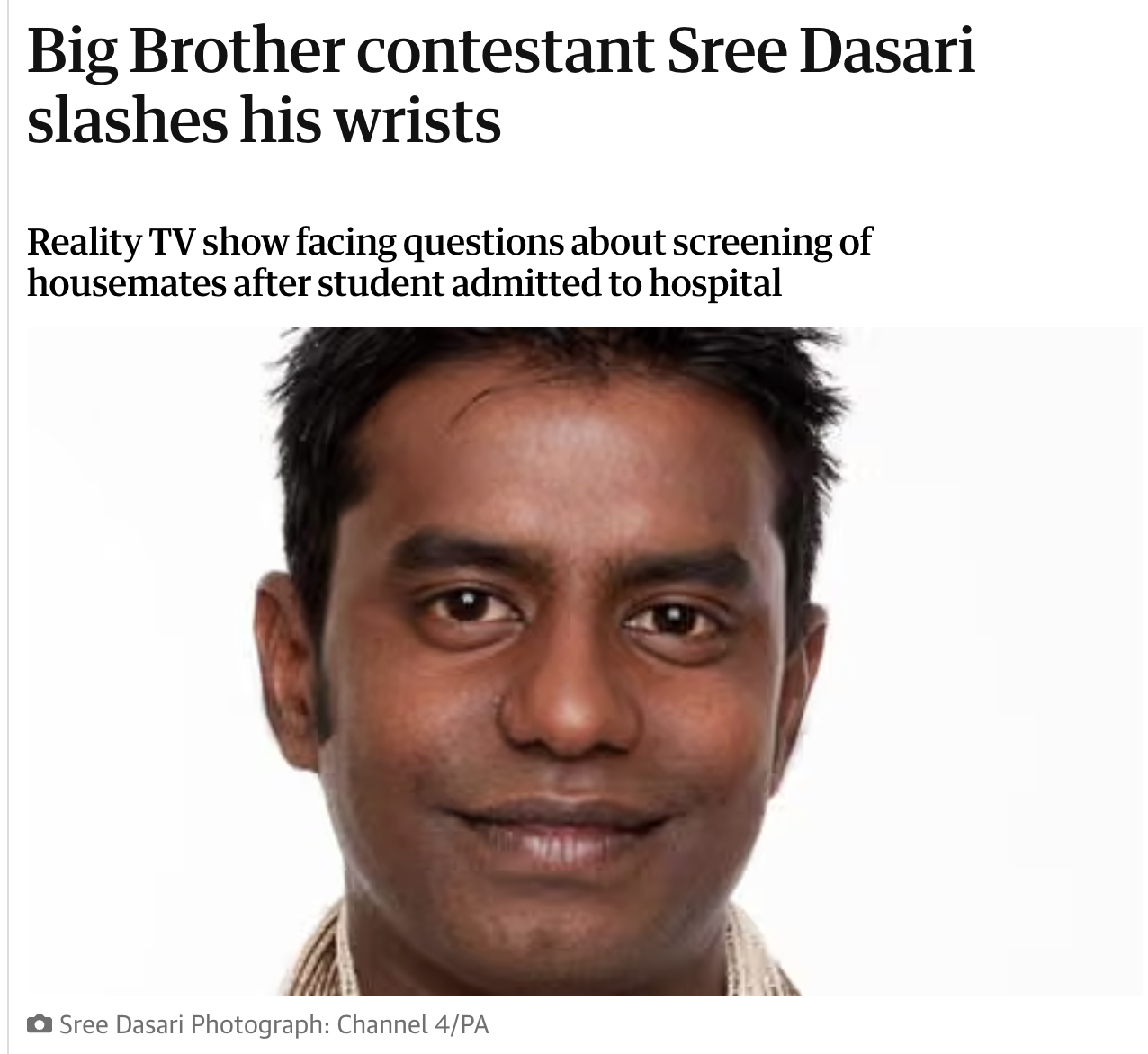
The duty of care guidelines are currently unprecedented due to very little academic research on the moral and ethical dichotomies experienced and no hard data on the consequences of performance (Whitlock, 2012). Another case involving CBS Big Brother contestant Sree Dasari displays how unpopularity among viewers causes psychological harm (The Guardian, 2009).
After the death of Mike Thalassitis, Sophie Gradon [and her boyfriend], Love Island contestants that committed sucide, production members called for better regulation to address the risks associated with sudden fame particularly within reality shows that utilise exploitation for views such as dating shows (The Guardian, 2019). Following these deaths, the health secretary, Matt Hancock, spoke out about a duty of care towards participants. “I think that it is a duty on any organisation that is putting people in the position of making them famous overnight,” he said (The Guardian, 2019).
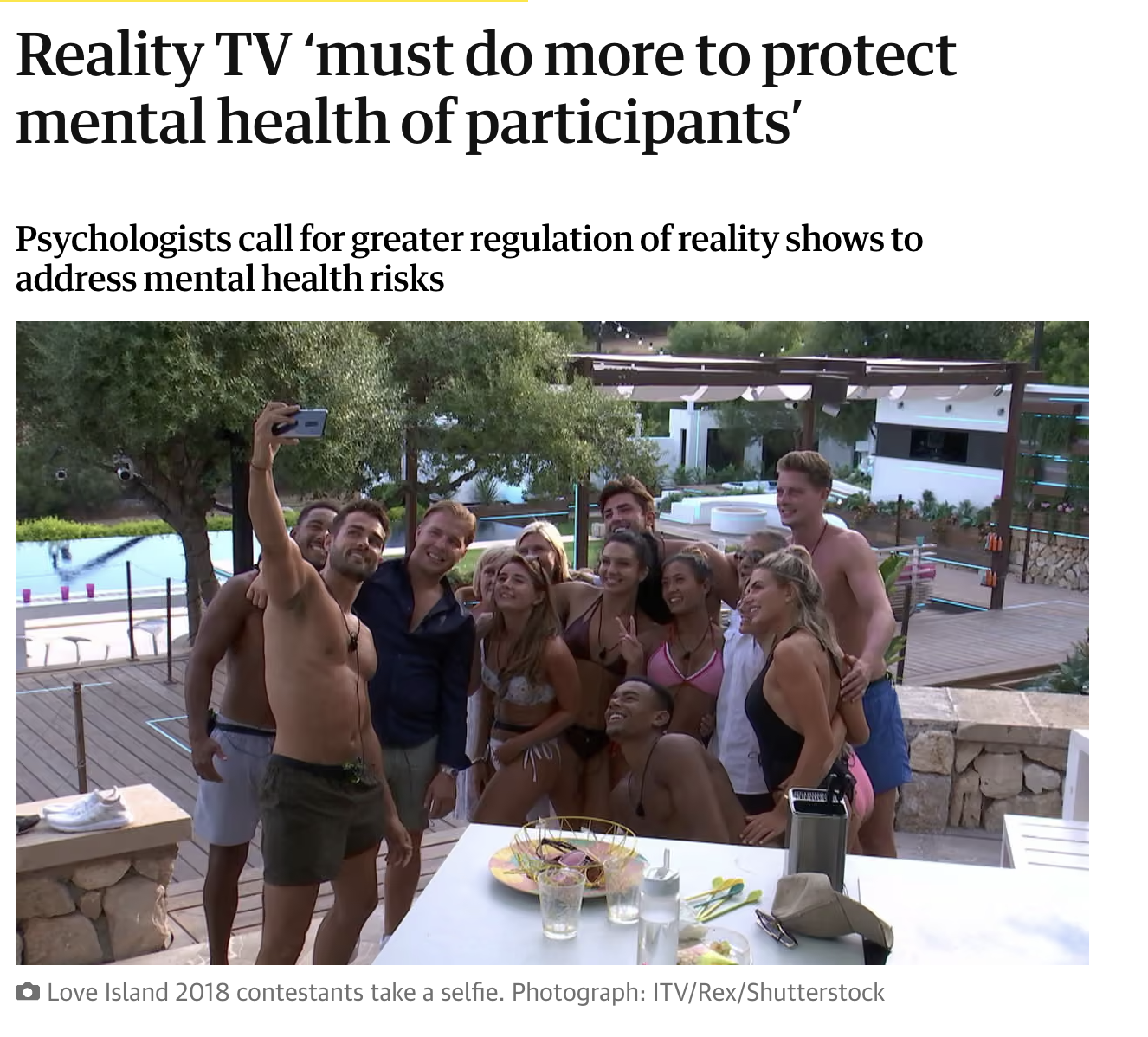
While reality television seeks to combat media elitism of fictional storylines that bear no relationship to its viewers and reflect participatory culture of postmodernism (Palmer, 2013) it must also comprehend that it has a responsibility to provide adequate support to it's contributors. A key factor leading to mistreatment of participants has been identified through empirical research over 30 in-depth interviews with producers that deducted pressure to meet high expectations with low resources suggests morally correct treatment of participants on-screen becomes difficult to maintain (Coleman, 2023). The nature of reality shows consists of short deadlines, producing mass content to displays on multiple digital platforms, ever-increasing competition for advertising revenue and working with inexperienced cast members (Whitlock, 2012), while for cast members unblemished reputations become a requirement for future employment. As a result of these factors, producers cut corners to meet deadlines, edit entire scenes out of the final product, utilise a controversial cast member to craft narrative storylines and may not possess the resources or experience to understand the danger they are imposing on themselves and others. Additionally, a desire to continue employment and a culture of silence within the industry limits freedom to complain or seek help for fear of further abuse and shame.
CBS show Undercover Boss consists of inaccurate portrayals of CEOs and employees, false promises, unfulfilled rewards, exaggerated behaviour that has received backlash on social media and lead to harassment online for individuals such as Doug Geller (Culture Map, 2014) and has been critiqued for its inaccurate portrayal of class exploitation through individualised paternalism (Aho, 2016).
Addressing the well-being of ordinary people participating in reality television shows is paramount to CBS, particularly as a result of the recent horrific events that have occurred. As a result, more research and enquiries has been done into the topic such as studies into 'The Dark Side of Reality TV' that investigate CBS's Big Brother deducting that it is a 'toxic viewing environment and a more conscientious approach is required as the ethical responsibilities of broadcasters is questioned in response to perpetuating these trends among participants and to audiences (Dasari, 2024). Chapias (2025) calls for ethical production practices and the standardization of policies in reality television after research uncovered challenges to identity were significant to negatively impacting participants mental health. Following these events, there have been some legal responses in Australia such as a case ruling in 2019 that allowed 'House Rules' contestant, Nicole Prince, to be entitled to compensation for psychological injury incurred during filming (The Conversation, 2019) and indicates a scope of duty of care under Australian Consumer Law to prevent harm being done to participants (Competition and Consumer Act 2010, Schedule 2).
CBS as a media industry has also introduced some initial guidelines to safeguard vulnerable people participating in these shows, at the moment this has included pre-show screening, follow-up support and psychological risk-assessments in their show Survivor (Boyle, 2025). Their refined contracts govern participant welfare and behaviour to a much higher and stronger extend then ever before including psychological and medical check-ups and they also acknowledge any psychological risk (Denhart, 2025).
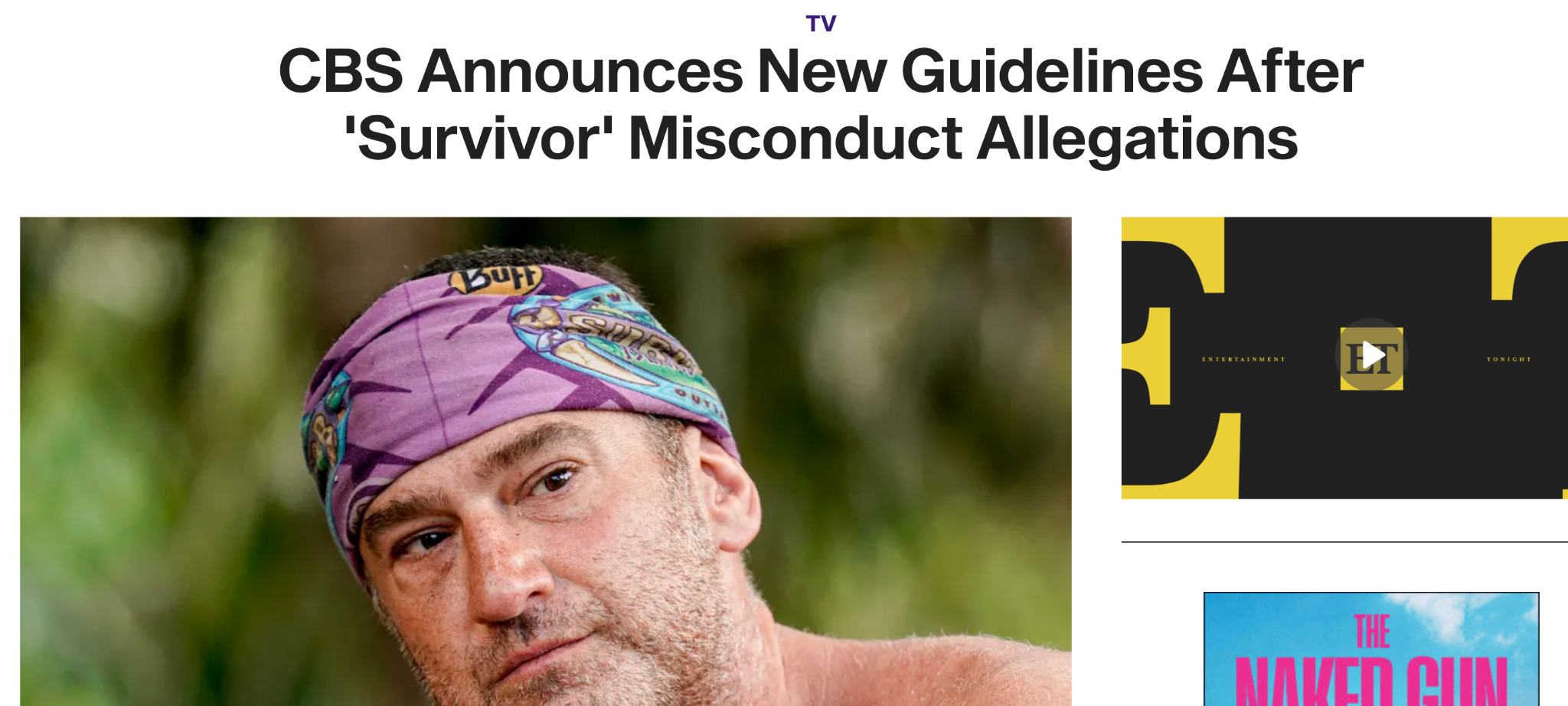
For CBS's show Big Brother, they publicly took accountability for racial incidents and controversies and some of the new protocols on their shows include professionals to handle confidential reports, enhanced pre-production orientation, training on anti-harassment and unconscious bias (Calvario, 2019).
The responses CBS has provided does miss the mark on many occasions proving that it is not effective in it's entirety at addressing the issues. When reality stars are depicted on television, their persona can be indistinguishable from the person themselves and therefore their life becomes a marketable product filled with invasions of privacy (Palmer, 2013), this requires post-show psychological follows and training to deal with media and harassment which CBS does not explicitly provide. Extensive research indicates the worrying implications of demanding work conditions within the industry and the nature of reality programs that demand rapid turn-around times between filming and viewing (Coleman, 2023), the power imbalance suggests that even with training, the production environment may still expose participants to emotional distress. Although CBS contracts are more explicit, they still involve consenting to risk and harm rather than working to avoid it in it's entirety.
On behalf of CBS, I propose recommendations that the company implements strong psychological support towards welfare for a significant period of time after the show ends and that media and harassment training is provided to participants to the extent of industry-level actors. Implementing post-show psychological treatment would not only address the concern of post-show bullying and harassment that occurs but also position CBS as a leader in protecting the vulnerability to ordinary participants therefore fostering greater trust. Training and education around what might be expected online, how to mitigate the impact that has on the individual and preventing victimisation can all significantly improve outcomes to those exposed to cyberbullying and identity defamation (Costea and Moraru, 2025). By pursuing further education prior to filming for participants, CBS can address the lack of resources individuals have to deal with online backlash no matter the inconsistent results of stricter editing and production regulations.
The emotional highs and lows of an audience during reality television viewing are co-created by care structures, hidden labour often taken for granted involved in the production of live experience including mood and time in audiovisual recordings by industry professionals, ordinary participants and audience (Hill, 2018). Due to privacy becoming a marketable product, and many reality television narratives becoming so extreme, participants tend to be in a pressurised workplace and the need for a fast turnaround turns means the story may not be told in it's entirety (Whitlock, 2012). If CBS takes the measure to implement post-show psychological support and media training prior to filming, the risk for participants would significantly decrease no matter the actions taken by broadcasters.
References
Addley, E. (2009, July 30). “Big Brother” contestant Sree Dasari slashes his wrists. The Guardian. https://www.theguardian.com/media/2009/jul/30/big-brother-sree-dasari-slashes-wrists
Aho, T. (2016). Reality TV and its audiences reconsidered: Class and poverty in Undercover Boss (CBS). In Class divisions in serial television (pp. 89-117). London: Palgrave Macmillan UK.
Arditi, D. (2023, September 21). Reality TV show contestants are more like unpaid interns than Hollywood stars. The Conversation. https://theconversation.com/reality-tv-show-contestants-are-more-like-unpaid-interns-than-hollywood-stars-213437
Boyle, K. (2025, June 23). How does the ‘Survivor’ psychological testing work? Inside the ‘most intense part’ of casting process. TV Insider. https://www.tvinsider.com/1198658/survivor-psychological-testing-casting-process/
Brito, C. (2021, April 5). “Cancel culture” seems to have started as an internet joke. Now it’s anything but. CBS News. https://www.cbsnews.com/news/cancel-culture-internet-joke-anything-but/
Calvario, L. (2019, December 17). CBS announces new guidelines after “Survivor” misconduct allegations. Entertainment Tonight. https://www.etonline.com/cbs-announces-new-guidelines-after-survivor-misconduct-allegations-138197
Chapais, C. (2025). Reality check: A qualitative study of mental well-being among participants. Psychology of Popular Media.
Coleman, E. R. (2023). The wellbeing of ordinary people in factual television production. Media, Culture & Society, 45(5), 1003-1018.
Coleman, E. R. (2020, May 27). Why suicide is still the shadow that hangs over reality TV: Hana Kimura & “Terrace House”. The Guardian. https://www.theguardian.com/tv-and-radio/2020/may/27/why-suicide-is-still-the-shadow-that-hangs-over-reality-tv-hana-kimura-terrace-house
Coleman, E. R. (2019, March 20). Reality TV must do more to protect mental health of participants. The Guardian. https://www.theguardian.com/tv-and-radio/2019/mar/20/reality-tv-must-do-more-to-protect-mental-health-of-participants
COSTEA, I., MORARU, C. E., & COBZEANU, A. (2025). KICKING BACK AGAINST BULLYING: SOCIAL MEDIA, PSYCHOLOGICAL DISTRESS, AND THE MODERATING ROLE OF KEMPO TRAINING AMONG ROMANIAN ADOLESCENTS. International Journal of Social and Educational Innovation (IJSEIro), 385-399.
Dasari, P. (2024). The Dark Side of Reality TV: A Case Study of. Available at SSRN 4741757.
Dehnart, A. (2010, May 31). Survivor contestant contract: The waivers, agreements that cast members, families sign. Reality Blurred. https://www.realityblurred.com/realitytv/2010/05/survivor-cast-contract/?utm_source=chatgpt.com
Elber, L. (2013, July 30). CBS president defends network’s response to ‘Big Brother’ contestants’ racial comments. Star Tribune. https://www.startribune.com/cbs-president-defends-network-s-response-to-big-brother-contestants-racial-comments/217455361
Friel, K. (2014, December 29). After controversial Undercover Boss episode, the Internet is really mad at Bikinis CEO. CultureMap Austin. https://austin.culturemap.com/news/entertainment/12-29-14-doug-gellar-bikinis-ceo-undercover-boss-cbs/turn0search0
Glaser, M., Garsoffky, B., & Schwan, S. (2012). What do we learn from docutainment? Processing hybrid television documentaries. Learning and Instruction, 22(1), 37-46.
Hill, A. (2019). Live reality television: Care structures within the production and reception of talent shows. Critical Studies in Television, 14(1), 7–21. https://doi.org/10.1177/1749602018774458
Lipson, D., & Baqué, Z. (2019). Rethinking the convergence of documentary and entertainment. InMedia. The French Journal of Media Studies, (7.2.).
Mjøs, O. (2022). The Power of Media and Communications: Imperialism, Influence, and Dominance. In (Editor), An Introduction to Global Media for the Twenty-First Century (pp. 151–186). Bloomsbury Publishing Inc. https://www-bloomsburycollections-com.ezproxy.newcastle.edu.au/monograph-detail?docid=b-9781350348721&tocid=b-9781350348721-chapter6
Munton, J. R. (2019, October 28). New House Rules: Landmark ruling could trigger other workers’ compensation claims from reality TV stars. IF. https://if.com.au/new-house-rules-landmark-ruling-could-trigger-other-workers-compensation-claims-from-reality-tv-stars/
Palmer, L. (2013). Sluts, brats, and sextuplets: The dangers of reality television for children and teen participants. Studies in Popular Culture, 36(1), 123-143.
Selvaratnam, N. (2021, July 30). Reality TV’s reckoning – for some stars their moment in the spotlight nearly cost them their life. ABC News. https://www.abc.net.au/news/2021-07-31/reality-tv-reckoning-dean-wells-natasha-spencer-mafs/100332684
Straubhaar, J. (2015). Global, regional, transnational, translocal. Media Industries Journal, 1(3).
Whitlock, C. (2013). Is manipulation within the construct of reality television ethical. Unpublished master’s thesis). University of Wollongong, Wollongong, Australia. Research Online. Retrieved from http://ro. uow. edu. au/theses/3967.